

The Art of Everyday Life in the Mediterranean
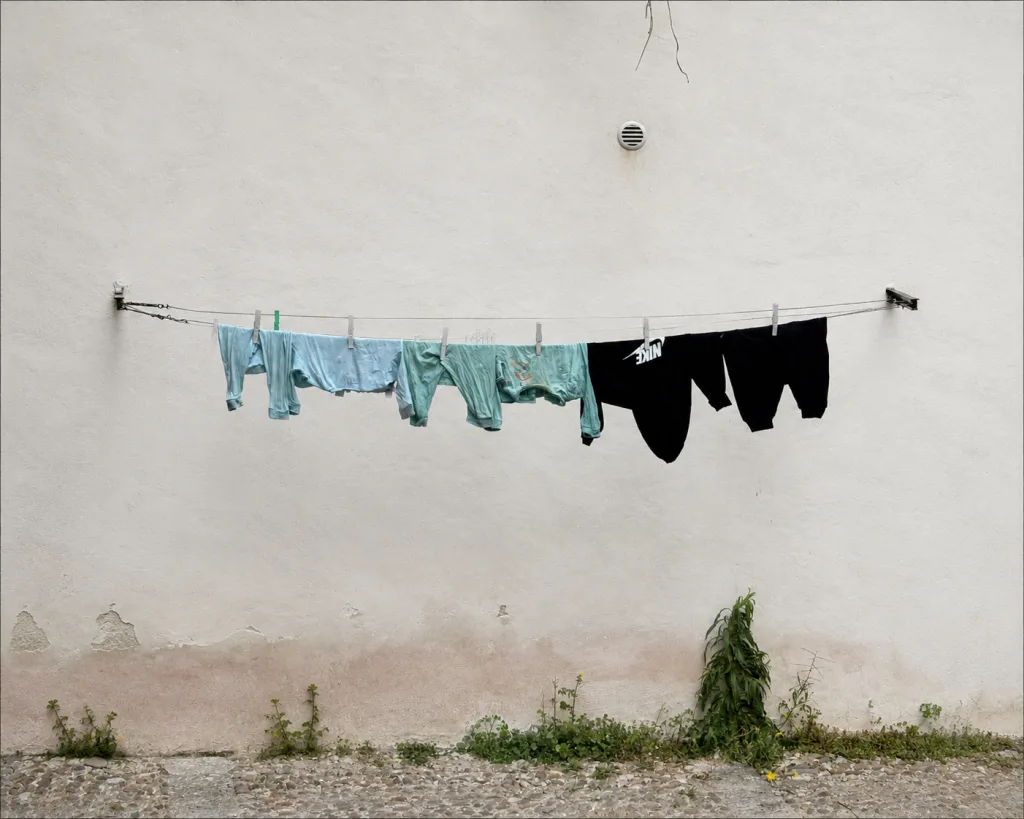
Palermo – 2025
In Southern Italy, and especially in Sicily, clothes hanging from balconies are almost part of the landscape. In the warm Mediterranean climate, life and nature are deeply intertwined: sun, wind, stone, plants, and people share the same everyday stage. Life feels simple here — not in a superficial way, but because it has been stripped of excess. And interestingly, this simplicity speaks to everyone: a businessperson, an intellectual, a child. The sense of happiness found here isn’t just about eating a gelato or admiring a beautiful view. It lives in the air, in the atmosphere, in the small details woven into the rhythm of daily life.
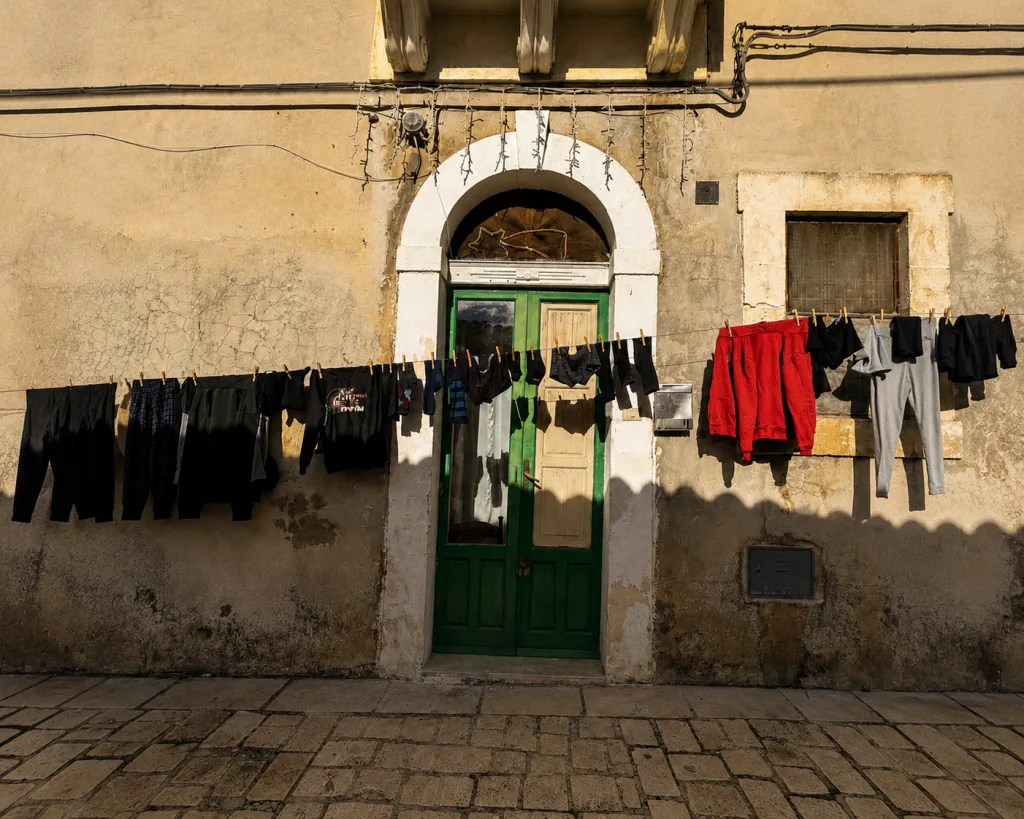
Modica – 2022
Clothes hanging from balconies are one of those details. At first glance, they may seem ordinary, even messy. But they are a clear sign that everyday life here is still visible. In many modern cities, life retreats behind closed doors, hidden from view. In Sicily, it spills outside without apology. Seeing it can feel like rediscovering something we didn’t even realise we had lost. Perhaps this is why it affects travellers so deeply.
Tourism studies have long pointed to a simple truth: people are no longer searching only for places that look beautiful, but for glimpses into real life. Sociologist Dean MacCannell describes this as the desire to move beyond the “frontstage” — the polished, curated surface — and into the “backstage,” where life actually happens. Clothes on a balcony quietly say: someone lives here. Life unfolds here. When this intimate detail appears against the theatrical backdrop of Baroque architecture, the effect becomes even stronger. Ornate stonework paired with something deeply human creates contrast, and our eyes are naturally drawn to it.
This is where the idea of everyday aesthetics comes into play. Aesthetic experience doesn’t belong only to museums or works of art. Ordinary objects, habits, and repeated gestures can also carry beauty. Laundry — when placed in the right context of stone balconies, sunlight, wind, and narrow streets — becomes poetic. Part of its power lies in its imperfection. Unironed pajamas, mismatched socks, sheets moving with the breeze: these details feel lived-in, honest, real. In the Mediterranean, everyday life still holds aesthetic value because the bond between life and nature has not been broken.
There is also a quieter psychological effect at work — what researchers call soft fascination. It’s the kind of attention that calms rather than exhausts us, like watching clouds drift or listening to leaves rustle. Laundry moving gently in the wind works in much the same way within an urban setting. It captures attention without demanding it, drawing us inward without effort. This may explain the sudden urge to take a photograph: the mind registers the moment as a small, soothing reward.
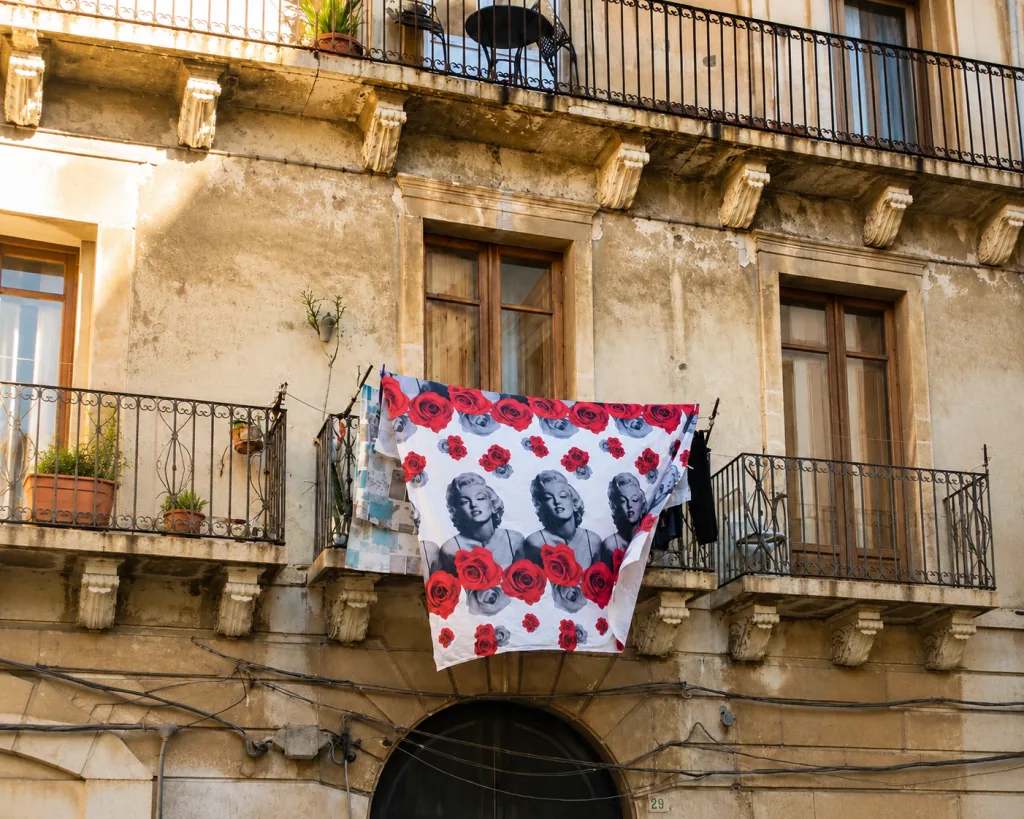
Ortigia Island – Siracusa 2022
Added to this is a sense of nostalgia and social warmth. Laundry represents home, care, routine, and invisible labor — aspects of life that modern culture often hides. Seeing them openly displayed creates a feeling of safety and familiarity. It can awaken memories of childhood, neighborly exchanges, open windows. There’s a quiet emotional response here, difficult to explain but deeply felt.
Our collective memory also plays a role. Clothes hanging from balconies don’t just feel real — they feel familiar. Italian cinema has embedded these images in our visual imagination for decades. Think of classic Italian films, where in the background you often find courtyards, stairwells, open windows, and laundry swaying in the air. These scenes are rarely central to the plot, yet they carry the soul of the story.
Italian Neorealism, which emerged after World War II, deliberately turned its camera toward everyday life. Streets replaced studios, ordinary people replaced actors, and small, fragile moments replaced grand drama. In these films, hanging laundry isn’t just a domestic task; it’s proof that life goes on. Even amid uncertainty and hardship, people wash, hang, open windows, and keep living. The camera doesn’t hide these moments — it honors them.
That sensibility is still alive today. Walking through Sicily or any Southern Italian town, the scenes you encounter feel strangely familiar, as if you’ve seen them before. Perhaps you have — on screen, long ago. This is why laundry on a balcony doesn’t feel foreign; it feels like stepping back into a scene you already know.
For travelers, this recognition deepens the experience. Travel today is less about sightseeing and more about connection — about stepping inside a place rather than observing it from a distance. The rise of Airbnb and home-sharing has moved people out of hotel lobbies and into real neighborhoods, where everyday life unfolds openly. In this context, everyday aesthetics become central to the travel experience.
Far from home, people discover that it’s often the smallest details that bring comfort: a balcony, a window, the rhythm of a street. These seemingly insignificant moments make travel feel meaningful and personal. Perhaps this is why people become so attached to traveling — because they are not just collecting destinations, but reconnecting with real life.
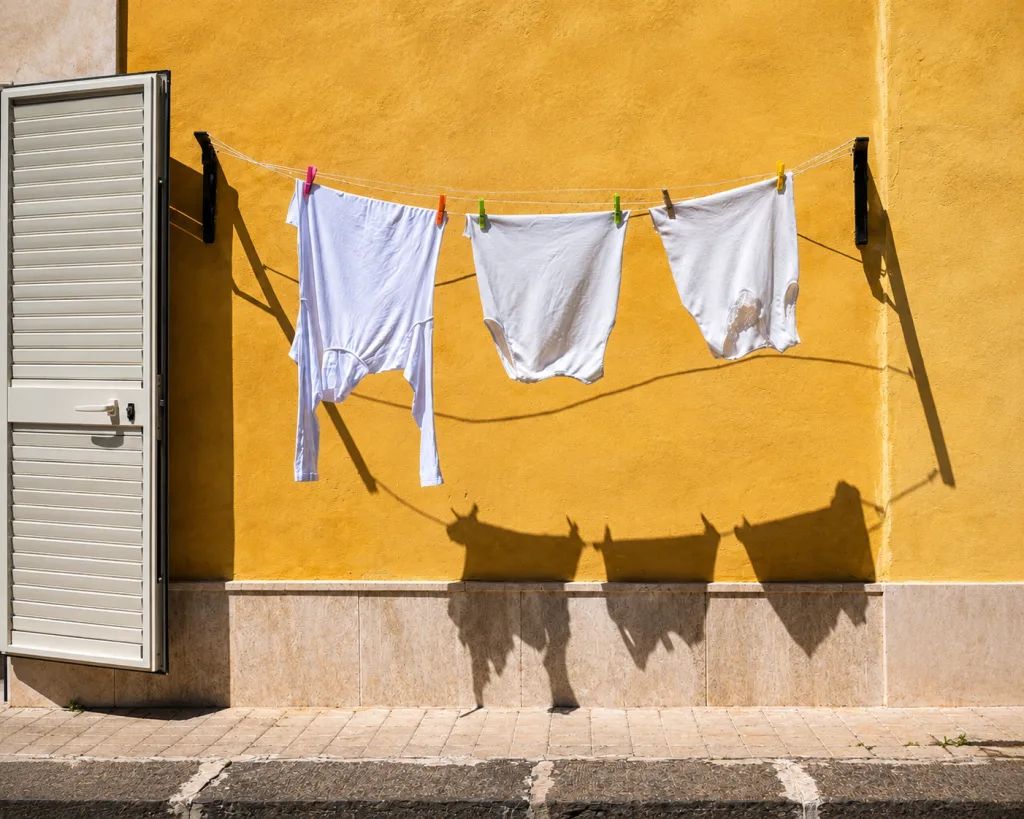
Ortigia Island – Siracusa 2024
I have lived this way in Sicily for nine years now. Born and raised in Istanbul, after fifteen years in Amsterdam and many journeys elsewhere, I can say this with certainty: the laundry hanging from balconies, the peeling paint on old buildings, uneven streets, fruit and vegetables sold outdoors, a climbing plant resting on a windowpane — each of these details adds something small but essential to my daily life. And from these details, I have shaped a way of living.
Here, life is built not on big decisions, but on small acts of noticing. It isn’t placed behind glass or arranged for display. It doesn’t hide backstage. It simply exists, as it is. Perhaps this is the true strength of the Mediterranean. Within this quiet authenticity, people feel a little safer, a little calmer, and a little more real.
And maybe this is why clothes hanging from balconies are so captivating — because they gently remind us of something we’ve forgotten.